Opinion
On Truth Commission, is Ranil sending the ball to Rajapakas? court?
10 Dec, 2023
By N Sathiya Moorthy
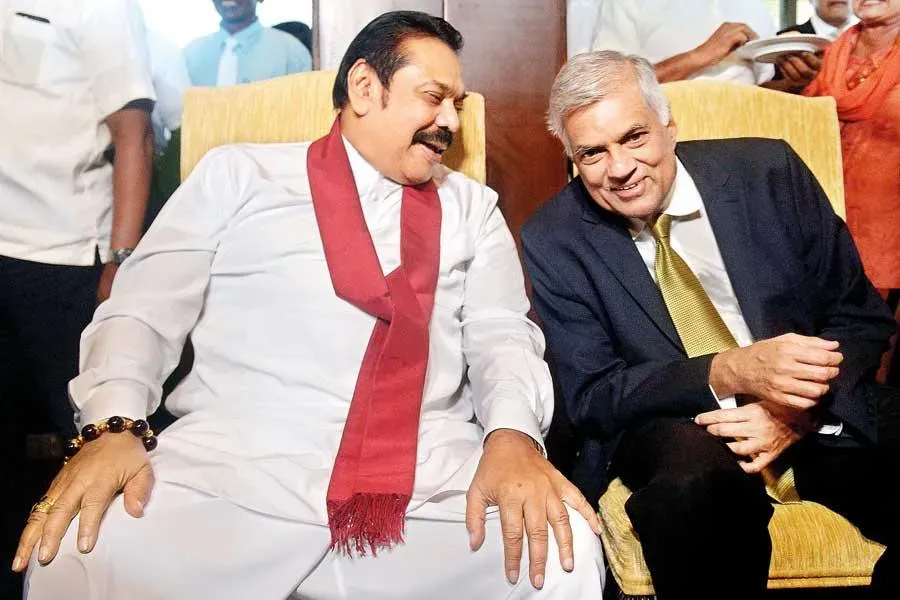
President?s Media Division?s announcement that the government was consulting stake-holders to finalise a draft Truth and Reconciliation Commission law for Parliament?s consideration is fraught with politics of the first order. In a House controlled by the Rajapaksas? SLPP, President Ranil seems intend sending the ball to their court, either to hit or to run and take whatever that flows from the elections that are to follow.
For the trained mind, the reasons are obvious. According to available information, the proposed commission, or at least the draft, would adopt the UNHRC definition for ?truth and reconciliation?, by whatever name each may call it. Equally important is the government?s proposal for the commission to address factors and issues that include not only war crimes and associated accountability issues but would also likely take up such other rights violations and privations in the post-war period.
However, there is no indication of the time-period that the proposed commission would address. Will it cover allegations of rights abuses during the war? If so, which period would it be dated back? Will it cover Just the end-game in Mullivaikkal, or the conclusive ?Eelam War IV?, or all four Eelam wars and the interspersing periods? Whichever way it be, will it address allegations of rights abuses by the Sri Lankan State, its agencies and individuals associated with the government, in areas otherwise not seen as war-bound regions, say Provinces other than the North and the East, too?
Likewise, where does the time-line end, post-war? Will it cover only the second term of President Mahinda Rajapaksa, or the entire period as on date, including the short-lived Gotayabaya presidency, 2019-22? That is another time-period, there are a large number of allegations of rights violations, both in the Tamil and Sinhala areas?
Cultural legacies
In the case of the Tamils, there were (and there still are) proven charges of pre-determined and motivated destruction of Tamil cultural heritage, legacies and identities, so what most them concerned the Hindu community! In the name of retracing the Buddhist legacy of the country, the Gota government appointed a committee to identify so-called ?Hindu encroachments? that was claimed to have happened at least a millennium back.
The government?s efforts, coupled conspicuously with violent initiatives by some Sinhala-Buddhist monks, were to declare acknowledged Hindu places of worship and thus cultural importance as having a ?Buddhist origin?. For decades now, the Tamils have been talking about Sinhala-Buddhist majoritarians allegedly taking over the southern-most Katargama ?kovil? for Hindus, and ?temple? in the case of Sinhala-Buddhists. That is in government gazette notifications in English, and also in the English language national newspapers.
The Supreme Court has already penalised President Maithripala Sirisena and civil service aides for laxity that allowed the ?Easter blasts? to happen. The court has also found all Rajapaksas guilty for last year?s economic crisis. Yet, the Catholic Church and Colombo Archbishop Malcolm Cardinal Ranjith are not satisfied with available findings on criminal culpability for the Easter blasts, and want the conspiracy angle probed further. After the Supreme Court?s findings on last year?s economic crisis, there are demands for court-ordered compensation for the victims, though no one has sought any through legal and judicial channels.
Violent, not-so violent
Through the entire period, at least until the commencement of Eelam War IV, coinciding with the early months of the first Mahinda presidency, there have been allegations of numerous other acts of rights violations involving the Sri Lankan State agencies at the level of individuals, groups and communities, all across the country. Included in this could be allegations of the government?s connivance in the anti-Muslim violence seemingly perpetrated by the Bodu Bala Sena (BBS) of Gnanasara Thero. The Thero is now silent and rather side-lined after the judiciary chastised him through a term in prison, which got shortened by the unjustifiable munificence of President Sirisena as among his last acts of compassion and constitutional pardon.
What then about the Aragalaya? There were very many allegations that the Sri Lankan State, using the leadership vacuum caused by the overnight exit of President Gota, and manned informally by then Prime Minister Wickremesinghe, now President, came down heavily on the Aragalaya protestors. There were also individual instances of the kind before earlier and later. The incumbent Wickremesinghe government also faces stray but existing charges on other violent and non-so-violence acts of rights? denial. The Tamils in particular are not tired of throwing up instances with evidence, but is there all across the country ? to be proven, of course.
Indefensible, impartial
If it is all about the Sri Lankan State and government apparatus, there is no knowing if the proposed commission would be tasked also to fix political responsibility of acts, otherwise found to be true or partially true in terms of rights? violations. In the Easter blasts case and the Economic crisis case, the Supreme Court has set a new normal, which maybe the proposed commission(s) could follow, or may be expected to follow. Some quality may emerge when the draft bill, when ready and gazetted, goes to the Supreme Court for ?determination? and constitutional validation. If so, where could the bug stop, especially after the Judiciary has held Presidents responsible for being irresponsible ? though such rulings have only followed after stepping down from the nation?s highest constitutional office?
Then, there is the larger question of holding the other side accountable for the ?provocative acts? like LTTE?s terrorism and even the Zahran-led terror attack on Easter, 2019.? If so, a commission of the kind that is being considered at present may also have to be tasked with powers to seek the truth behind and beyond such provocative acts, with the pre-plotted ways to provoke the State and its agencies, determined otherwise to peace and order, not necessarily in that order.
What more, at a time there is a wide-spread expectation / anticipation about JVP?s Anura Kumara Dissanayake leading the pack in private mood-polls across the country, will there be demands from within the party, to date back the commission and its agenda to cover the two Insurgencies of 1971 and 1987-89? There could be popular demands from across the southern Sinhala heart-land about a probe of the kind into the Second JVP insurgency as international academic estimates put the number of youth killed at 60,000-100,000. The very variance of the figure may have stories to tell.
Leave aside what the final draft of the proposed law be, even a persistent JVP demand (can hugely embarrass SJP?s Opposition Leader and presidential hopeful, Sajith Premadasa. He would be called upon to defend his slain father, President Ranasinghe Premadasa, who was in office during the Second Insurgency, and was thus also the Supreme Commander of the armed forces, which went all out to end it all by all means ?available? to them.
When the Second Insurgency is the topic of discussion, there are those who argue that the UNP presidencies of J R Jayawardene and Premadasa, Sr, used, abused and misused the nation-wide Emergency, proclaimed in the wake of the LTTE terrorism, to silent media and academic reports and criticism of what was unfolding in the South, for nearly two years.
There were/are also those who argue that the wily JRJ also cheated /? fooled the Indian neighbour to believe that his request for inducting the IPKF was only to keep an eye/check on the LTTE in the North and the East after withdrawing Sri Lankan forces from those regions. The charge was that JRJ all along had planned to re-deploy the forces in the South to finish off the JVP once and for all.
This is not to defend the indefensible, but what is indefensible will still be for the proposed commission to find out. Yet, a probe dating back to the late eighties, if not the early seventies (into the First JVP Insurgency) can open a Pandora?s Box from which a later-day UNP President like Wickremesinghe cannot escape political, if not criminal or constitutional responsibility.
It is possible that in the wake of the IMF second tranche and future western investments and credit-lines, which alone can be the incumbent?s poll-hopes just now, Ranil is adhering to a West-centric demand on a Truth and Reconciliation Commission. First, this helps him to overcome excessive criticism at the UNHRC, or even a showdown, where he will still have to fall back on China and Russia, which the US-led West loves to hate and whose fingers on the IMF purse-strings that matter the most for him and the nation more until both give up on each other.
By thus forwarding a draft Bill to Parliament, on the proposed constitution of a Truth Commission, President Ranil is seems clear in mind that those otherwise against him, either within the country or outside, including western governments will not have a cause for complaint against him. If Parliament passes the bill after amending it to include the Supreme Court?s ?determination? in its time, if the House votes it out, then the blame would be that of the Rajapaksas, especially that of Mahinda.
If it is voted in, Ranil will be there to take the credit ? and with the hope that at least a section of past critics, including some Tamil groups and individuals may have seeming justification to back him in the presidential poll.
Amen!
(The writer is a Policy Analyst & Political Commentator, based in Chennai, India. Email: sathiyam54@nsathiyamoorthy.com)
Recommended For You