News
UN Women Regional Director Concludes Sri Lanka Visit, Highlights Need to Close Gender Gaps for Inclusive Recovery
11 Apr, 2026
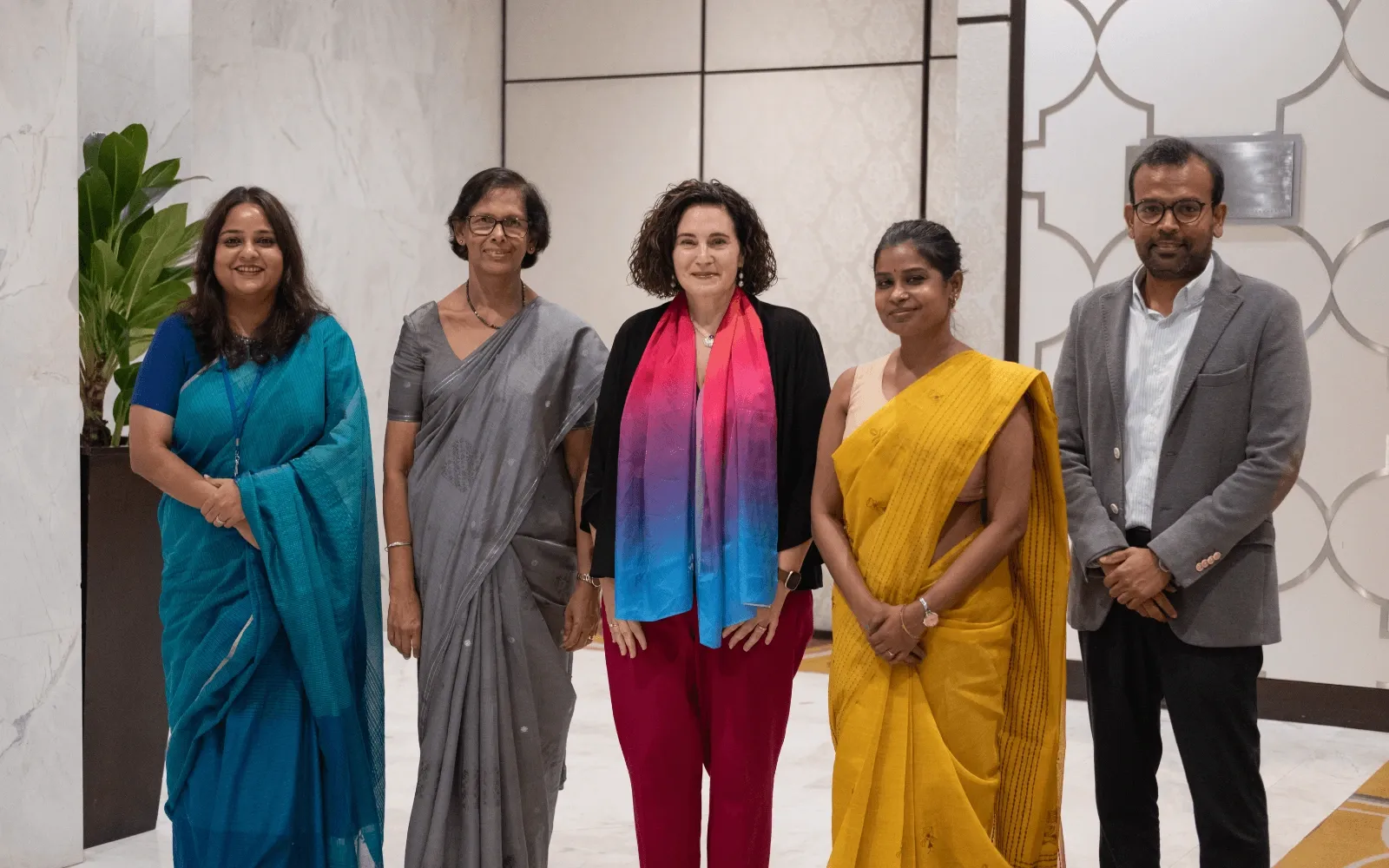
UN Women Regional Director for Asia and the Pacific, Christine Arab, concluded a two-day official visit to Sri Lanka (25–26 March), emphasizing that closing gender gaps in labour force participation, access to economic opportunities, and decision-making is critical to the country’s inclusive recovery. She also launched the Sri Lanka Country Gender Equality Profile (CGEP), a comprehensive analysis designed to inform evidence-based policymaking and strategic investments.
The CGEP notes that despite achieving high human development levels and ranking first in South Asia by 2022, Sri Lanka has continued to regress on gender equality markers, falling sharply from 16th place in the Global Gender Gap Index in 2010 to 130th by 2025 — a decline of over 100 places in just 15 years.
The publication features detailed gender statistics on women’s economic and political participation, education, health and morbidity, poverty and social protection, safety and security, as well as the gendered impacts of climate change and disasters. It also includes analysis of the country’s legal and institutional frameworks, acknowledging positive judicial and administrative reforms, while observing that persistent and layered inequalities and discriminatory social norms continue to undermine the rights of many women across the country. The profile concludes with recommendations for gender-transformative governance.
During her visit, Arab held a high-level discussion with the Minister of Women and Child Affairs, Saroja Savithri Paulraj, focusing on strengthening collaboration on policy reform, women’s economic empowerment, and efforts to end violence against women and girls.
“Gender equality is fundamental to Sri Lanka’s inclusive recovery and long-term resilience,” said Arab. “Data, strong institutions, and meaningful partnerships are essential to ensuring that women and girls can fully contribute to and benefit from the country’s development.”
She also met with the High Commissioners of Australia and Canada and their teams, as well as the Embassy of Japan in Sri Lanka, to reinforce partnerships supporting inclusive development and women’s leadership. Arab also met members of Sri Lanka’s National Commission on Women (NCW), underscoring the importance of community-driven change and women’s voices in shaping policy.
Engagement with civil society organizations was another key component of the visit. Speaking during a discussion, Samitha Sugathimala, Programme Director, Foundation for Innovative Social Development (FISD), emphasized that “the shrinking space for civil society remains a critical challenge, particularly for organizations working on gender equality and social justice. In such contexts, collective action among civil society actors is not just important but essential to resist pushback, amplify marginalized voices, and sustain community-driven change.”
In all her engagements, Arab reiterated the importance of strengthening institutions, investing in data, and fostering multi-stakeholder partnerships to accelerate progress on gender equality.
The keynote address by Dr. Radhika Coomaraswamy, former United Nations Under-Secretary-General and Special Representative of the Secretary-General for Children and Armed Conflict, and former Chairperson of the Human Rights Commission of Sri Lanka, provided an in-depth analysis of the state of gender equality in Sri Lanka, grounding these priorities in the country’s lived realities and highlighting persistent structural challenges.
A panel discussion, moderated by Arab, brought together current and former members of independent commissions to explore structural and institutional barriers that continue to impede progress, examine gaps in accountability and rights protection, and identify priority reforms required to drive meaningful, gender-responsive governance in the final stretch towards 2030.
Panelist Dr. Padma Gunaratne, Member of the NCW (2025–present) and Consultant Neurologist, stated that “Sri Lanka stands at a critical moment to strengthen its gender governance architecture. In this regard, it is essential to ensure that the National Commission on Women is both independent and well-resourced, while also clarifying and reinforcing the mandates of key institutions.”
Arab also appeared in an exclusive national television interview on Face to Face, where she highlighted the economic and social imperative of advancing women’s empowerment, noting that “investing in women is not only a matter of rights, but a driver of economic growth and sustainable development for Sri Lanka.”
UN Women remains committed to working alongside the Government of Sri Lanka, development partners, and civil society to advance policies and programmes that promote equal rights, leadership opportunities, and economic participation for women and girls across the country.
Recommended For You