Opinion
In Tamil North, NPP has to prove that the parliamentary poll tally was not a ?fluke?
29 Mar, 2025
By?N Sathiya Moorthy
In the normal course, the nation-wide Local Government (LG) elections of 6 May should have been a non-event of some kind in the Tamil North. But not any more after the ruling JVP-NPP has seemingly made it a prestige issue, as if to make an ethnic point that its traditional southern Sinhala political adversaries did not attempt without a local ally of whatever kind.
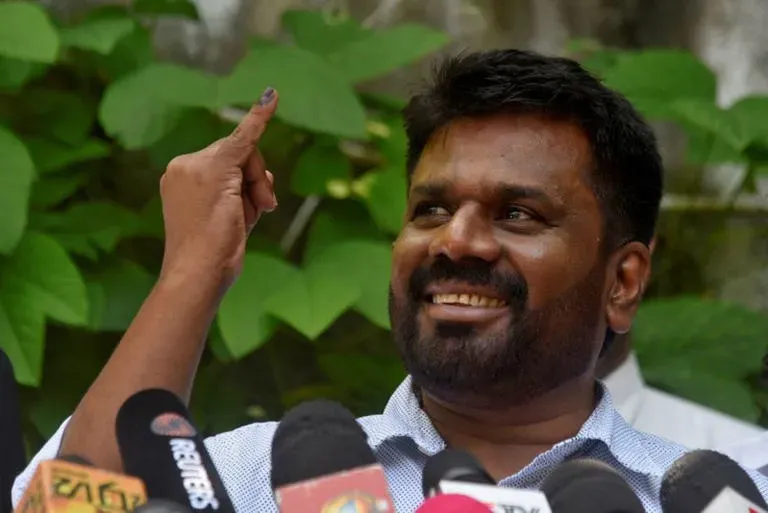
The NPP?s hopes, aspirations and compulsions flow from the party having done creditably in the parliamentary elections last year. Yes, they were expected to do better, not because the Tamil voters were swayed by what had happened elsewhere across the presidential poll earlier. That was when JVP-NPP?s Anura Kumara Dissanayake had been elected President. That the victory came even without him crossing the half-way mark, the mandated scale for a first-round victory.
Instead, the NPP victory came about because of the Tamil voters? antipathy towards their own political leaders and societal outfits that have seemingly failed them all these years after the ethnic war. No, it is not about their not having got a negotiated settlement to the vexatious ethnic issue of the past decades, but even foregoing all the opportunities, especially through the four-plus years of the Maithri-Ranil duo dispensation, 2015-19.
Also, through the past years, the way the Tamil polity was (still) fighting among themselves, and their lil? big leaders fighting their ego clashes without caring for the concerns of their people, whether on political rights or economic plight, through the Covid lock-down, post-Aragalaya phase and later on, the Tamil voters, especially the younger generation, chose the parliamentary polls to teach them a lesson that the former class would remember. But did they learn any lesson? The answer is a big ?NO?.
One-time wonder
It is this sentiment that the NPP is still betting on. Otherwise, the ruling combine cannot afford to lose the initiative from the parliamentary elections for more than one reason. If it fails to win respectably this time, not only in the North but also in the Tamil areas of the East, it will add credibility to the claims by some Tamil claims that it was all a ?fluke? and a ?one-time wonder?.
After the parliamentary elections, some Northern leaders and polity had begun campaigning among their people how voting for a ?southern party? the way they had done could erode the very credibility of the Tamil demands and the ?great sacrifices? through the three decades of ethnic war. Their hopes and expectations were that in the coming years and future elections, the Tamil voters would correct the wrong, a rare aberration, as they would want to believe.
It was with that kind of belief on the one hand and shamed by a ?southern party? so very completely for the first time that Northern Tamil leaders like Gajendra Kumar Ponnambalam and Selvam Adaikalanathan, representing two different political hues, began talking for all Tamil parties to find a common ideological ground ? as different from a shared politico-electoral path. Of course, the LG election was in everyone?s mind, followed by the Provincial Council (PC) elections that too have been delayed across the country, for years now.
Yet, if their initiatives did not work, that owed not to their attempts to find a common political demand-package on the ethnic count, but to evolve a coalition of the willing, to keep ITAK?s M A Sumanthiran out of it all. Their attitude and approach became all the more visible and cheap as all Tamil parties by now have come to demand a ?federal solution? on the one hand and the re-merger of the North and the East on the other.
To this, ITAK?s Sritharan MP added a new dimension. His sympathies were with the anti-Sumanthiran groups outside the party. He also headed the anti-Sumanthiran faction within. But whenever the chips were/are down ? and it happened more frequently in the recent weeks and months ? Sritharan claimed that he would stick with the party?s decision. After a point, he too knew full well that the ITAK central committee favoured Sumanthiran?s line to any other, whether or not it was under his thumb.
Autonomous engine
Not to be out-done or out-smarted, Sumanthiran too played his own games. It meant that he not only had his way within the party but he also became an autonomous engine from within ? or, so it seemed up to a point, and after another point. It was unclear, for instance, if Suma had consulted his team within the party before going publicly, nearly proposing Sritharan for the chief minister?s job of the Northern Province.
The reasons are not far to seek. No sooner than Sumanthiran went to town with what even otherwise looked like a quixotic proposal, Sritharan simply ruled out any such possibility. This implied that at least he had not given his consent, even if consulted, through third parties.
The social media at the time teased Sumanthiran, going as far as to claim that Suma had hoped to fill the parliamentary vacancy caused by the possible resignation of Sritharan, if he entered the fray as a chief minister candidate. The construct flowed from the fact that from within the ITAK candidates from the Jaffna electoral district, comprising Jaffna and Kilinochchi administrative district, Sumanthiran had obtained the second highest number of votes after Sritharan from the ITAK list ? and would be entitled to fill a vacancy caused by the latter?s exit.
Taught, learnt
These are all internal dynamics that now have no relevance, yes. What is of relevance is however the fact that even after meeting, talking and writing letters that were also promptly shared with the media, neither Gajan Ponnambalam, nor Selvam A, thought it wise to field common candidates through the respective alliances that they now head. Hence, no one can complain that the ITAK alone sought to go its way, the central committee having attested Sumanthiran?s plans in this regard.
Today, the Tamil polity?s hopes flow from a prayer that their voters would not desert them a second time in a row within six months or so. The ITAK?s stand-alone ambitions flow from the belief that they having won the highest number of votes for a Tamil party in the North, and seats in the parliamentary elections from the North and the East ? eight, out of which five came from the East ? the Tamil voters, who have taught their polity a lesson, and also learnt another in the process, would not waste their votes this time round.
In the ITAK?s calculations, none of the other Tamil parties / alliances, including Independent groups, is capable of winning big this time. Nor do they deserve to win ? which is going too far in matters of ITAK perception. Whether the content of such a perception is a reality or not, the very idea of a perception of the kind is a reality. Other parties call it ?political arrogance? from a past that is no longer there, nor is it valid in the future.
It is from such constructs that the JVP-NPP seems to derive its electoral hopes this time, starting with a wish to win the prestigious Jaffna municipal council. At least the parliamentary vote-share of parties from the Jaffna municipal area has fed their hopes ? and ambitions, but their Tamil rivals still believe that the two are two different ball games, and the one who had won in the first need not win a second time, too.
(The writer is a Chennai-based Policy Analyst & Political Commentator. Email: sathiyam54@nsathiyamoorthy.com)
Recommended For You