Opinion
Who still wants Mahinda in the lime-light
25 Jan, 2025
By?N Sathiya Moorthy
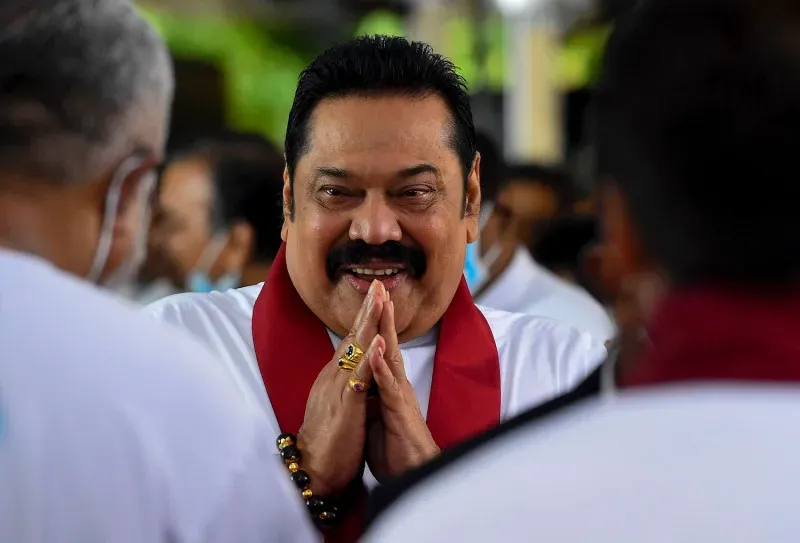
Yes, the matter is ?sub judice? after former President Mahinda Rajapaksa, as the affected party, has taken the issue of his personal security to the Supreme Court. It should not however preclude the opportunity to make some general observations on the government?s decision in the matter without impeding the legal process or administrative courses.
The issue has two elements though Mahinda has agitated only one of them in the court. It relates to the continuing reduction of personnel allotted for his personal security. In particular, he has claimed ? and possibly it is true ? that there are no gun-holding men in his security detail. They are all policemen, none from the armed forces, some of whose men are specially trained and equipped to deal with a crisis situation in proximate security that Mahinda has implied. In other nations, policemen are used for what is called ?outer perimeter security?, where they are also not expected to carry weapons.
The second issue about Mahinda?s security flows from the government?s decision to direct all former Presidents or their widowed spouses to vacate the official residence allotted to them, or pay up market rent. In the case of Mahinda, the authorities have fixed a monthly rent of LKR 4.7 m per month for the Colombo residence, located in Wijeyrama Mawatha.? MR has not made it a legal issue and his political aides have been shouting from roof-tops that the people would provide him with an alternate residence, if forced.
Ideological moorings
Independent of the legal issues, there is the question if incumbent President Anura Kumara Dissanayake should have joined the chorus of his ministers in the matter, or stayed away from it all, putting himself above the rest, including Mahinda and other Rajapaksas, especially the former?s parliamentarian-son Namal R. By joining issue directly with the rival political camp, Dissanayake might have already made it political, subduing if not substituting the administrative elements involved.
It is understandable that the twin decisions flowed from the ruling JVP-NPP?s ideological bearings and moorings.? Both Anura and his political alliance had promised it when fighting the presidential and parliamentary elections one after the other, last year. So, keeping up the promise to the people should be on the top of their minds and agenda when it comes to post-poll implementation of such promises.
After all, they have two more nation-wide elections to face this year, namely, those for the local government institutions and the nine Provincial Councils. The temptation for the voters to go through their check-list of the rulers? past poll promises on the implementation would be upper-most in the minds of the ruling party leaders. Dissanayake is no exception ? but he should be as President for all of Sri Lanka, and not just his traditional JVP supporters, or the much later voter-base that sided with him and his alliance, last year.
Yes, other Presidents before him behaved like politicians and not as the Head of State and Government, and also the Supreme Commander of the Armed Forces ? or, in many instances involving their administrative judgment involving a political rival. For Mahinda, his current difficulties and dilemma is a throwback to his early months and years as President since 2005, when he likewise harassed predecessor and party-boss Chandrika Bandaranaike-Kumaratunga (CBK). It is ?dhamma? or ?dharma?, or a re-visit thereof, in the eyes of some of those who still remember those years.
But Dissanayake and his JVP are cut out of a different cloth, to be stitched differently. They promised ?change? yes, they also promised to make former Presidents feel and act that they are no different once out of office, yes, but they also implied that their promised ?changes? would be for the larger good. Especially, no one would want to see Dissanayake playing ?political vendetta? in office, for a successor to replay the same when he is in the Opposition, years and terms from now. That would mean ?no change? in the eyes of the people who have voted for him now, whatever be their evolving perceptions in the months and years ahead.
Not valid argument
The larger question is still not about the politics of it, but the kind of professionalism that should go into making those value-decisions, which in t urn would still have consequences, starting with parties and governments in power. The first and foremost is how the armed forces commands would feel if there is a slip-up while in their care ? and even more when not being so. They would then be asking themselves if they should still have prevailed over the powers-that-be, that they should have kept away from such decision-making apparatuses, where no politics should have been allowed in the first place.
Across the world, security personnel have felt like committing mass suicide (maybe an exaggeration!) when a quarry under their care is taken out by a sharp-shooter or a terrorist. In Sri Lanka, the way CBK as incumbent President suffered at the hands of the LTTE terrorists during her re-election bid campaign, is a case in point. The argument that if the security personnel could not protect an incumbent President facing life-threat from the LTTE at the time, why expect them to protect former Presidents, cannot be a valid argument, if posed.
Elsewhere, we have the examples of President John F Kennedy in the US, from the sixties, and former Prime Minister Rajiv Gandhi in neighbouring India. National discourses over the lack of security and their public behaviour have not concluded in either case. The lesson is that no security is good security.
In the case of Rajiv Gandhi, where the fair name of Sri Lanka too got sullied owing to the involvement of the LTTE, there were open complaints by his Congress Party that the suicide-bomber could approach him only because the predecessor V P Singh government had lowered his security when he was actually facing life-threats from multiple sources like the LTTE and the Khalistanis from within the country, but who had external support and funding. It was the reverse of the LTTE, which was an external terror group that had internal support.
What followed the Rajiv Gandhi assassination is worth a note by the present-day Sri Lankan rulers. The Indian government doubled up the security cover for former Presidents and Prime Ministers, and extended the same to their families for ten more years if and when they pass on, assassinated or not. Already, after the Indira Gandhi assassination involving an incumbent Prime Minister, the Indian government had passed the National Security Guards (NSG) Act, something akin to the Secret Service in the US but not as huge and strong, at least not yet, going by sources in the public domain.
Lowering of guard
Should President Dissanayake join the issue with Mahinda R, who for all practical purposes is a has-been, who had given up on a future in politics and public life, almost for good. When Namal Rajapaksa and other SLPP leaders complained about the government asking Mahinda to vacate the official residence, it was Anura who personally joined the issue. He pointed to the likes of Ranil and Gota R as former Presidents and also Hema Premadasa moving over to their personal residences in Colombo, without burdening the Treasury. He asked why Mahinda could not follow their example.
The President should know the difference. For a former President to move over to a private residence on his own volition is one thing. It is an entirely another cuppa if the government asks him to leave, and forces him to leave. Even when a former President likewise shifts to a private residence on his own, the government should order a security audit and advise him or her accordingly. Where needed, their security should be spruced up, of course at the government?s expense.
Two things are striking in the matter. First and foremost, when the courts are seized of the matter, the judges would not be evaluating it on the ruling party?s ideology and electoral commitments. If at all they discuss the case in some detail, they will be looking at the professional assessment by the security agencies, which over the past years have reportedly recommended the lowering of guard for Mahinda, among others.
Yes, it had begun long before Dissanayake?s time and JVP?s ideology and poll promises began playing a role. It is still left for the courts and judges to decide if they would want to undertake a qualitative analysis of such recommendations by a professional body of the government?s security experts in service. That matter, if broached now, is sub judice, after all.
Then, there is the other question, of course, political. Why do successive governments want to lower the security of a leader like Mahinda R, whose current claims in his court case, is true as far as his unflinching political leadership to the nation and its armed forces in the annihilation of the LTTE is well-documented and acknowledged? Was it, and is it because, they fear that minus the security detail, he would not risk coming out in the open and try to re-establish his lost political glory and electoral reach? The same applies to providing him with a residence that the security officials certify as secure.
Independent analyses of the presidential poll especially would show that victor Dissanayake ?captured? almost all of the traditional Mahinda votes, which has counted over the 40-per cent mark consistently until last year. The split SJB-UNP candidates, when their scores are combined, may have beaten Dissanayake at it but not otherwise. Of course, the SJB especially had the votes of the three minority communities in the country, backed as Candidate Sajith Premadasa was endorsed by most of their popular political parties and alliances.
The parliamentary election was another game altogether, where the continuing conflict between SJB?s Sajith and UNP?s Ranil put off most of the latter?s neutral voter-support, and they too moved to the JVP-NPP camp, in search of a more stable government for the next five years at the very least. The JVP behaviour now, as being repeatedly outlined by none other than President Dissanayake is that they do not as yet believe that Mahinda and the Rajapaksas are a dead-force, electorally, but actually have potential to climb back to the centre-stage.
If so, their current efforts at rolling down his security, as if it is applied to every other leader in equal terms with him, can be interpreted only one way. That they are still afraid of the electoral reach of the ?Mahinda magic? that has otherwise waned, which they seem to have sworn to keep alive and burning ? for their own political reasons, as their constant punching-bag. The voter may not believe it that way, and who knows at times, their own hatred could turn into sympathy for the fallen man, especially if there is one mis-shot, a misfire, politically, that is!
(The writer is a Chennai-based Policy Analyst & Political Commentator. Email: sathiyam54@nsathiyamoorthy.com)
Recommended For You