News
Central Bank of Sri Lanka decides to ease monetary policy stance further
27 Nov, 2024
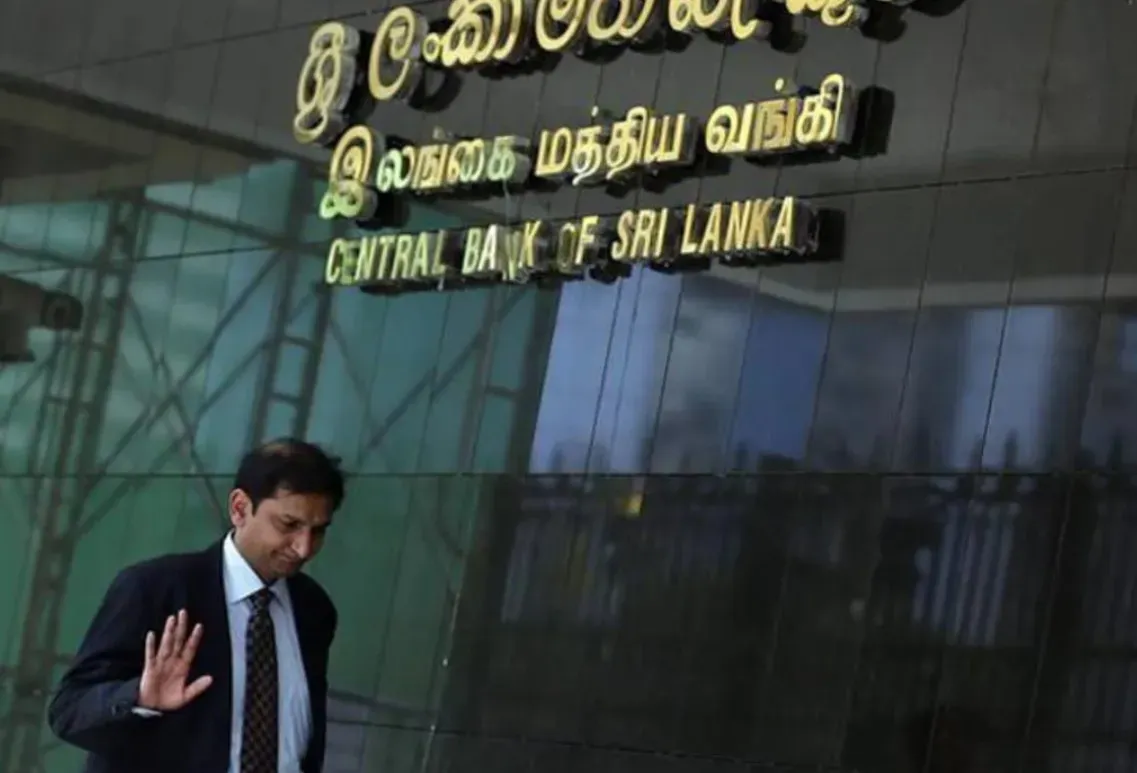
The Central Bank of Sri Lanka has decided to further ease the monetary policy stance and set the newly introduced Overnight Policy Rate (OPR) at 8.00 per cent.
With this change, the effective reduction in the policy interest rate would be around 50 basis points from the current level of the Average Weighted Call Money Rate (AWCMR), which continues to serve as the operating target of the Flexible Inflation Targeting ( FIT) framework.
The Monetary Policy Board arrived at the decision to ease the monetary policy stance following a comprehensive assessment of current and expected domestic and international economic developments, including risks and uncertainties, to ensure that inflation treads towards the inflation target of 5 per cent, while supporting the economy to reach its full capacity.
In particular, with the latest available incoming data, the critical factors that convinced the Board to further ease monetary policy were the deeper-than-expected deflation conditions in the near term with further moderation of underlying inflationary pressures and inflation expectations, better-than-expected developments on the external front, and the lack of further space available for a reduction in market lending rates.
Effective 27 November 2024, the Central Bank also moved to a single policy interest rate mechanism from its dual policy interest rate mechanism.
Accordingly, the Overnight Policy Rate (OPR), set at 8.00 per cent, will serve as the primary monetary policy tool of the Central Bank to signal and operationalise its monetary policy stance henceforth. Moreover, with this transition to the single policy interest rate mechanism, the Standing Deposit Facility Rate (SDFR) and the Standing Lending Facility Rate (SLFR) will no longer be considered policy interest rates of the Central Bank.
SDFR and SLFR, the rates applicable for standing facilities that will continue to be available for participatory institutions for overnight transactions with the Central Bank, are linked to the OPR with a margin of ? 50 basis points. Accordingly, SDFR and SLFR will be 7.50 per cent and 8.50 per cent, respectively.
Headline inflation, as measured by the year-on-year change in the Colombo Consumer Price Index (CCPI), which turned negative in September, remained in the negative territory in October 2024.
This was driven by the previous downward revisions to electricity tariffs and domestic fuel prices, and the softening of volatile food prices, amid subdued demand pressures. Core inflation which reflects underlying demand conditions in the economy, also moderated. Latest projections reveal that headline inflation will remain negative in the forthcoming months, deeper than previously projected, mainly due to the effects of larger downward adjustments in fuel prices and transport costs and the reduction in volatile food prices.
However, inflation is expected to turn positive from mid-2025 and gradually converge towards the targeted level of 5 per cent over the medium term, supported by appropriate policy adjustments. While core inflation is projected to slow further over the next few months, a reversal of this trend is expected with core inflation stabilising over the medium term. Meanwhile, inflation expectations appear to have further moderated since the previous monetary policy review.
Market interest rates, which declined over time in response to the accommodative monetary policy stance, have largely stabilised. Supported by reduced market lending interest rates, credit extended to the private sector by Licensed Commercial Banks (LCBs) continued to expand notably since May 2024
Sectoral data for Q3-2024 on credit to the private sector also display broad-based growth across all major economic sectors. The expansionary momentum of credit to the private sector is expected to continue, underpinned by favourable market lending interest rates, the anticipated expansion of domestic economic activity and improving sentiments.
Meanwhile, the pressure observed in yields on government securities has also eased to some extent owing to improved fiscal performance, benign inflation outlook, and overall stable economic conditions.
A larger expansion in import expenditure relative to export earnings drove the merchandise trade deficit to widen in the nine months ending September 2024 compared to the same period in 2023.
However, improvements in earnings from tourism and workers? remittances during this period, contributed positively to the external current account. The Sri Lanka rupee recorded a year-todate appreciation of around 11.0 per cent against the US dollar. With significant purchase of foreign exchange from the domestic market by the Central Bank and multilateral fund inflows, Gross Official Reserves (GOR) stood at US dollars 6.5 billion (including the swap facility from the People?s Bank of China) as of end October 2024.
Meanwhile, the Sri Lankan authorities reached a staff-level agreement on the third review of the Extended Fund Facility with the International Monetary Fund (IMF-EFF).
The continuation of the IMF-EFF programme, the expected finalisation of the debt restructuring process and continued financial support from multilateral and bilateral development partners will further enhance external sector resilience and investor confidence, amidst the country?s attempts to enhance non-debt creating inflows.
In consideration of the current and expected macroeconomic developments including those highlighted above, the Monetary Policy Board of the Central Bank of Sri Lanka, at its meeting held on 26 November 2024, decided to ease the monetary policy stance further and set the Overnight Policy Rate (OPR) at 8.00 per cent, compared to the current level of AWCMR around 8.50 per cent. While the Board is satisfied with the outcomes of accommodative monetary policy measures adopted thus far, the stabilisation of market lending interest rates at current levels amidst a deflationary environment presents the Central Bank with the opportunity to carefully effect further policy easing.
This could stimulate demand, support domestic economic activity and help retrace inflation towards its target over the medium term. The decision to ease the monetary policy stance further is also supported by improving external sector resilience, while the Board also took comfort in the continuation of fiscal consolidation.
That said, the Board will continue to closely monitor the macroeconomic developments and adopt a data-driven approach to ensure that it stays on course to achieve the inflation target of 5 per cent over the medium term, while supporting the economy to reach its potential.? (Colombo Gazette)
Recommended For You