Opinion
Has ?Tamil nationalism? lost out?
23 Nov, 2024
By?N Sathiya Moorthy
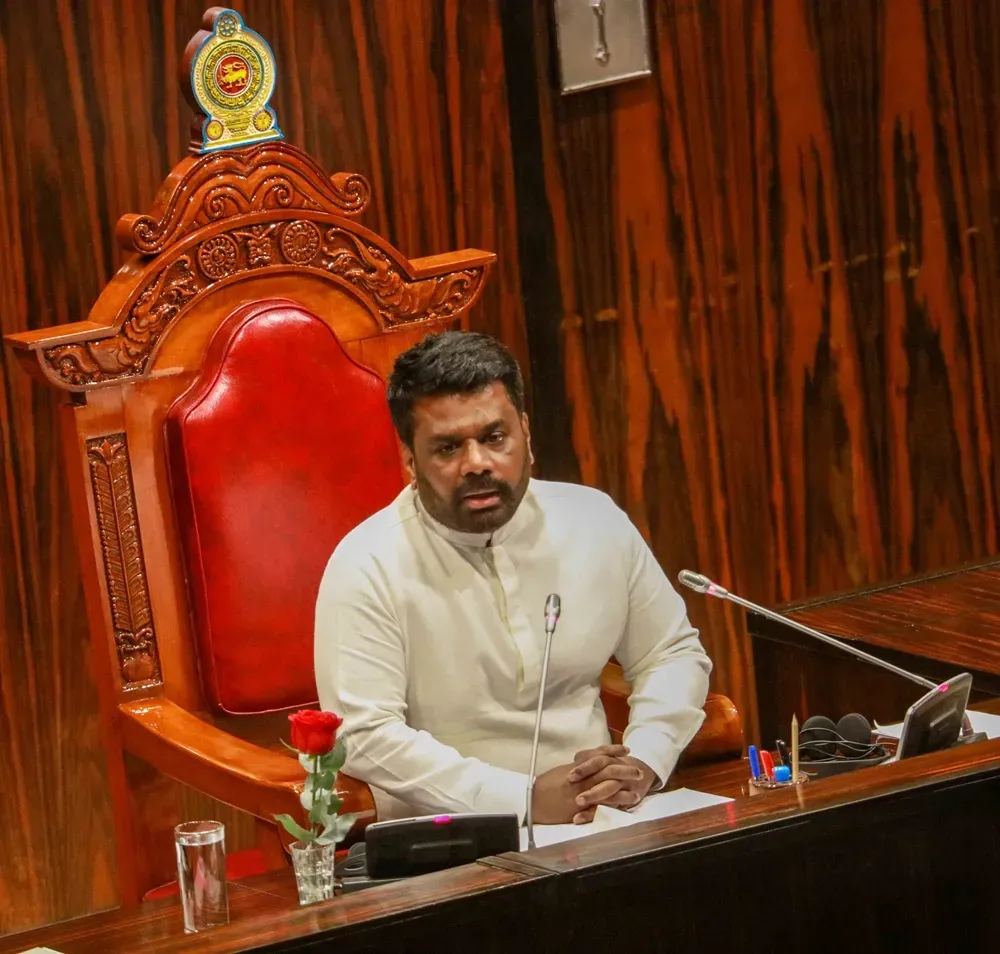
As expected, President Anura Kumara Dissanayake (AKD) all but ignored the once sensitive and even more controversial ethnic issue in the country in his maiden address to the 10th?Parliament. In a passing, yet sweeping reference, he declared that there was ?no room for racial politics, religious violence?. The former refers to the ethnic issue and the latter to terrorist attacks of the 2019 Easter serial-blasts kind.
With this one sentence, the President also swept two sensitive issues centred on two of the three ethnic minorities in the country under the carpet effortlessly. In his time, even war-winning President Mahinda Rajapaksa was relatively conciliatory ? as at some of the SLT leaders in the North and their Diaspora operatives would concede, at least in private. In the post-war era, President Maithripala Sirisena was nonchalant in the matter. His last months in office were consumed by the Easter blasts, and the consequent blame-fixing, on Muslims as a community, going beyond individual terrorists and groups.
It was thus left to Ranil Wickremesinghe, as Prime Minister under Sirisena and President after Gotabaya Rajapaksa, to play hide and seek with the ethnic issue ? and worse still with the Easter blasts. Now, President Dissanayake has to ensure that his ?hobnobbing? with the Catholic Church and his more-than-frequent meetings with Malcolm Cardinal Ranjith, is neither political, nor anywhere? near ?religious extremism? of a persuasive kind in matters of yet another blasts probe.
Devastating impact
In its own way, the message from the Tamil North this time is as powerful as that in the Sinhala South. Taking off from where the South had begun in the presidential poll, the North also voted the centre-left JVP-NPP this time. Their victory was greater in Jaffna, supposedly the ?cultural capital? of the SLT community, both in terms of numbers and the impact. The NPP won three of six seats from Jaffna electoral district, comprising Jaffna and Kilinochchi administrative districts, yes, but the impact of it on the Tamil psyche, rather the self-styled ?Tamil nationalist? psyche has been devastating, to say the least.
The NPP won three of six seats, including a bonus seat in Jaffna electoral district and two of six in neighbouring Vanni, where however there is a sizable population of Sinhalas. In both districts, for instance, the NPP was nowhere in the reckoning in the presidential polls, held only weeks earlier. It was so in the eastern Muslim areas and also the Upcountry districts, where again, the flags of SJB?s Sajith Premadasa and UNP?s incumbent President Ranil Wickremesinghe fluttered against NPP?s Dissanayake, who became the victor.
Hence, for the so-called ?nationalists? to call the parliamentary poll results, an aberration is wrong. As in other minority regions, the Northern Tamils too learnt their lessons from the presidential poll, where the rest of the country had voted against ?corruption, inefficiency and ineffectiveness? in favour of all that was going in favour of the NPP.
Truth to be acknowledged, in none of these places, the NPP can claim to have popular candidates, at least candidates whose faces were recognisable, leave aside acceptable, in the respective districts. Nor did the NPP leaders, starting with President Dissanayake make any extra effort to ?win over? the minorities? votes, especially since they were confident of repeating their performance in the Sinhala South.
Willingness to wait
If anything, after Dissanayake polled less than the mandated 50-per cent votes for a straight win on first preference votes, the NPP should have been circumspect when it came to the parliamentary elections. It should have tried to woo all those voters and electoral districts where they did not come on the top in the presidential election. But they did not over-exert themselves in the department.
Yes, the division of anti-NPP votes, so to say, did cause damage in the presidential poll.? When put together, Sajith at 32 per cent and Ranil at 17 polled more votes than Dissanayake, actually crossing the half-way mark, though only very marginally. Considering that both came from the same political stock and ideological mooring, the expectation for them to contest the parliamentary election together was very high.
Going by reports, Sajith won?t have it, reportedly expressing a willingness to wait until the next time round to take his chance a third time for President, after 2019 and 2024. His first enemy, then and now, were his one-time party boss Ranil, and not the man standing against him, smiling victoriously and taunting him.
At the end of it all, history will also record that the disunity among the anti-NPP parties and constituencies (even leaving out the SLPP and Namal Rajapaksa) was a major contributing factor in catapulting AKD and NPP to power, twice in two national elections, and in quick succession. But unlike in the presidential poll, the NPP recorded a substantially high and stable 61 per cent votes in the parliamentary elections, indicating migration of votes from the other side to this side.
Immense disaffection
This is what happened also in the Tamil North. The so-called ?Tamil nationalist? parties were sixes and sevens as always, and this enthused the Tamil voters, too, to ?look for change?, in a way, look for ?stability? and ?continuity? of a different kind. Thus, they had been conditioned to vote for ?continuity? only in the name of ?Tamil nationalist? cause/call, which they were now convinced remained a slogan ? nothing more, nothing less.
Worse still, this slogan and sloganeering were no more on a common cause but only to promote the personal interests of a select few political leaders. Most of them were as old in Tamil politics as the Ranils and the Sajiths were in the southern / national politics, causing immense disaffection in their traditional vote-banks, too.
It was not as immense or intense in the Tamil North, but it was just there. All those voters who had been voting for a cause or leader or party other than ?Tamil nationalism? more or less consolidated their votes in favour of the NPP, if only to see for themselves what the latter was capable of, and how, when in power.
That it was a kind of consolidation of ?non-nationalist? Tamil votes, if not ?anti-nationalist? Tamil votes became clear when the likes of Douglas Devananda and Angajan Ramanathan lost in Jaffna electoral district, and so did the SJB and the UNP-NDF, too, compared to their traditional vote-banks. For the latter, too, even the poor showing in the North, compared to the presidential vote-shares mattered.
Minimalist, maximalist
There was another hidden cause for such a showing by the NPP, particularly in terms of vote-shares, coming on the top of the heap that way, in the North, as well. Yes, that entailed them to two elected seats and one ?bonus? seat as the party with the largest vote-share in the electoral district. But even if they had not won any seats, for argument?s sake, they might still have won the 24-per cent vote-share that they did.
The reasons are not far to seek. These were the votes that were going to candidates and parties for whom ?Tamil nationalism? was not their real electoral cause, even in the Tamil North. For these voters, bread and butter issues matter the most, and so do jobs and economic development — development that comes with jobs and higher family incomes.
According to some calculations, close to half the Jaffna district population are economically poor, unable to come out of the mess that the long years of ?ethnic war? ? call it the ?LTTE war?, if you wish ? had immersed them in. Their hope, rather, expectation now, is that the ruling NPP, given their much-touted centre-left political ideology, will live up to its image, and help improve their lot.
Even if there is a vague and varied suggestion of such improvement in the first five years of the NPP rule, then the party may have the northern Tamil voters, as much as it may have retained the loyalty of the Sinhala voters all across the South, precisely for the same reasons. If not, again, these voters may go elsewhere, and by default give ?Tamil nationalist? cause another chance. It?s a big ?if?, before which the ?Tamil nationalists? have to tell the world that they can work together and work on a platform that is common and minimalist, not unachievable and maximalist ? as has always been.
After spurning it all along, their sudden love for India-facilitated 13-A, at least as starters, can be imagined, can be expected, too. When they did so, at least some of them, mentally, were also spurning India, but to no avail. Today, they are all queuing up before the Indian High Commission in Colombo, wanting to intercede in a situation, which is embarrassingly difficult for New Delhi to do ? given the JVP?s militant opposition to 13-A, even if in the distant past.
That way, leave aside the NPP?s electoral showing, but even the message from the North is that this business ?of ?ethnic politics? and a political solution have to be played out more and more internally, inside the country ? and less and less, in the international arena, the Indian neighbour included. Yes, it has something to do with the NPP?s showing, but has more to do with the lack of unity among the Tamil parties and leaders ? as Indian External Affairs Minister S Jaishankar and National Security Advisor A K Doval had implored them against, during separate visits ahead of the polls, but to no avail!
(The writer is a Chennai-based Policy Analyst & Political Commentator. Email: sathiyam54@nsathiyamoorthy.com)
Recommended For You