Opinion
This monkey business
24 Apr, 2023
By N Sathiya Moorthy
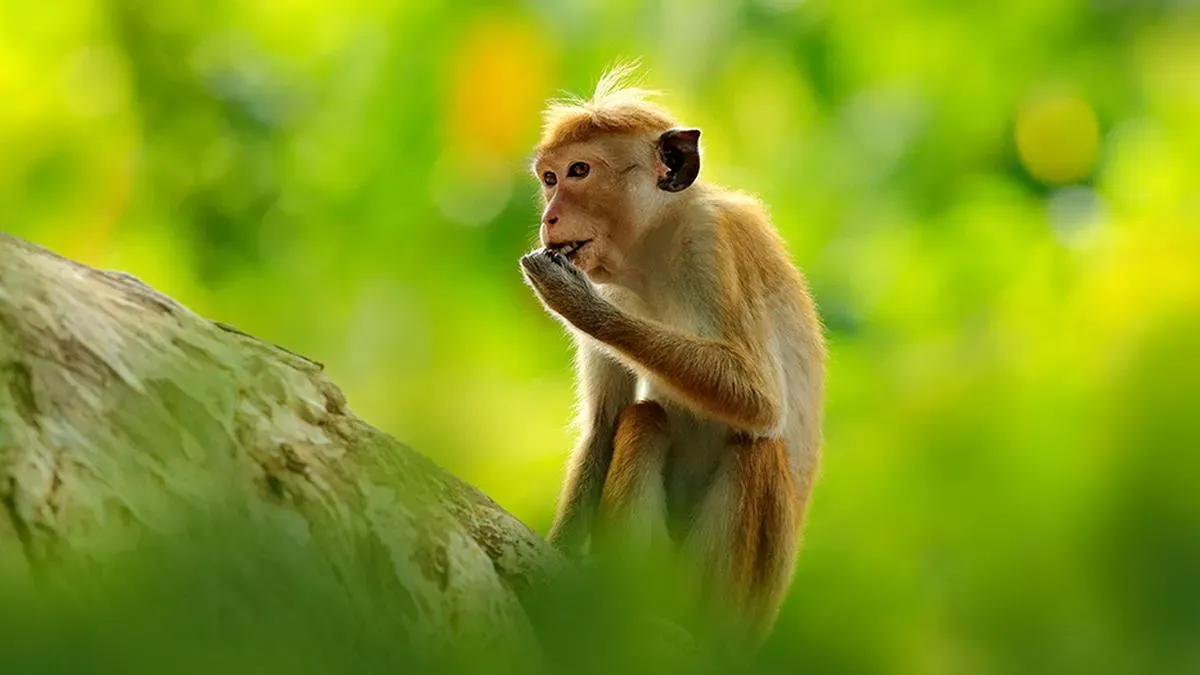
Whoever said that this monkey business would not work here should now take his word back. The confusion over the government?s unbeatable early claims of plans to export 100,000 toque macaque monkeys to China, in a way, has provided some lighter moments in a nation over-burdened by continuing economic crisis and unending political drama of every kind.
Barring that it was monkey business after all, as monkeys are to be traded for dollars (or yuans, as the case may be), everything about the initial government announcement seems falling short, on subsequent inquiry. First, yes, China is involved, but then the Chinese Embassy in Colombo has since clarified that they never asked for those monkeys.
Then the government ?clarified? that the demand came from a private importer in China and not the government directly or otherwise. As the social media activists asked, ?Are there private importers in China??
The numbers did not make sense as the claim was for releasing those imported moneys in China?s zoos and zoological parks. As the quick-witted googled for information and then calculated with 18 zoos across the nation, it would work out to an average 5,500-plus monkey per zoo.
Is anyone that crazy to let off so many monkeys all at once in the open, when Sri Lanka?s complaints are that they are the single largest destroyer of standing crops in the country? That includes even kitchen gardens, which provide relief to individual families, especially in these times of economic distress for individual families, especially in rural areas.
The one last question ? and hopefully so ? relates to the end-use, however. While the claims are that they are for breeding in Chinese zoos, environmentalists and self-styled experts on Chinese food habits and culinary skills claim that these monkeys are for the dinner tables in that country.
Some of them claim that the brain of the toque macaque monkey is a delicacy for Chinese, which only the rich in that country could afford. There are others with gruesome ideas, and claim that the Chinese eat those monkeys alive. It still beats one?s how is it possible to eat an animal or bird without killing it…
Compensating the nation
Clearly, some over-enthusiastic government minister or his bureaucratic aide (or both together) seemed wanting to impress President Ranil Wickremesinghe that the agriculture and allied departments too were capable of bringing in forex, when the government so very badly needs, anyway. Maybe, someone out there badly needed an elevation or an extension of service, post-retirement.
If their idea was to compensate the nation for the money that their departments had lost on importing organic fertiliser from China under the previous Gotabaya presidency, they had the grace and courteousness not to make such claims in public. Apart from being a scam of unbelievable proportions from the start, the organic fertiliser fiasco was the single largest factor that took the urban, anti-government Aragalaya protests across the rural country all at once ? and almost overnight, without anyone trying.
According to reports, the Chinese importer, if one still exists, has promised LKR 5,000 for each monkey. He would be spending a total of LKR 50,000 per monkey in terms of testing and transporting. If so, how much money, in terms of dollars, could come the government?s way?
Will it, then, for once, insist that the scheme should bring jobs and incomes to local families and revenues to the government, going beyond whatever the ?monkey-catcher? will get in the end? And what kind of systems and schemes would the government evolve for ensuring that the money gets well distributed among those who are in real need?
Endangered species
All of it matters if and only if the monkeys are going to be exported in the first place. That too after the nation is convinced of all details on all counts. For now, the government has appointed a committee to go into these details, but then the government has to first come with the details on the identity of the importer and his motive.
Instead,, other ministers are busy eating the words (and not monkeys) of their colleagues, who presented the monkey business as their achievement and contributing to reviving the economy and making dollars. It remains to be seen if a report comes out of the committee, and what its contents really are.
It was after environmentalists and other enthusiasts started flagging questions and concerns about the real importer and his real purpose and motive. With the Chinese embassy indicating that there was some monkey business as the Beijing government was not involved in it, ministers and ministries here have a lot more explanation to give.
For its part, the Chinese embassy recalled how the nation was a signatory to international conventions on wildlife protection and import rules. The implication was that they would not import those monkeys, even for their zoos, leave alone their dining tables back home.
For all the concerns expressed by conservationists, no one has yet asked the simple question if these monkeys in a tropical country such as Sri Lanka could survive the cruel winters of China even for a day, for an hour. If the answer is ?No?, then the motive becomes suspect, if not proven.
If they are not for eating, then possibly, they are for laboratory tests. A hundred thousand monkeys may be too large a number to be populated and used for tests simultaneously. If so, then it should go without saying that the import will be spread out over the years. If the government has got details of the same, break-up of annual or seasonal requirements, no one has come up with the details.
The other question in context is if there are private labs in China for private importers to bring in a hundred thousand monkeys. The answer raises the question if like all its construction firms that have contracted work with governments across the country, including Sri Lanka, the so-called monkey-importer too is a front for the government.
Such questions remain, but will have validity if and only if the real purpose for the prospective imports is made clear. But then within the country, the only one where the specific species of the monkey is found, the government has been lifting all protective laws covering their survival. The world over, the toque macaque monkeys are declared an ?endangered species?, but inside the country, the government has lifted a ban on their killing.
The reasons are not far to seek. According to reports, toque macaque monkeys destroy more crops, vegetation and harvests than any other. That of course leaves out the Man, who is the single largest destroyer of the Nature, including the natural habitats of these monkeys.
Of course, in Sri Lanka, where elephants are defied, as in the rest of non-Islamic countries in South Asia and South-East Asia, the pachyderm is another sure destroyer of standing crops. The government has banned their killing, including by erecting electric fence around farm lands that they tend to invade at nights and in groups.
For years, studies and media reports have constantly talked about the man-elephant conflict in the country, but no one has mentioned the toque macaque monkeys in the same vein. That is saying a lot, but saying little, particularly when the import-demand now is only for a hundred thousand animals against a monkey population of, yes, three million!
(The writer is a policy analyst & political commentator, based in Chennai, India. Email: sathiyam54@nsathiyamoorthy.com)
Recommended For You