Opinion
Debt moratorium on Sri Lanka: China?s reluctance versus India’s willingness to cooperate with the IMF
26 Mar, 2023
President Ranil Wickremesinghe told Parliament last week that he had received a financial assurance letter from the Exim Bank of China in the evening before he addressed Parliament. The letter of agreement, which he signed with the Governor of the Central Bank, had been sent to the International Monetary Fund.
Now it is up to the International Monetary Fund to consider Sri Lanka?s case, which will probably happen before the end of March.
Sri Lanka could have presented its case in December if not for the delay on the part of China on a debt moratorium.
China definitely dragged its feet, which caused a lot of anxiety and uncertainty in Sri Lanka with regard to a bailout package from the International Monetary Fund (IMF). In contrast, India was quick to respond. The visit of Foreign Minister Dr. S. Jaishankar opened the gates to India?s assurances to the International Monetary Fund (IMF) and many more.
In an open letter to bilateral creditors, President Wickremesinghe thanked all bilateral creditors for their support in making the IMF program a success.
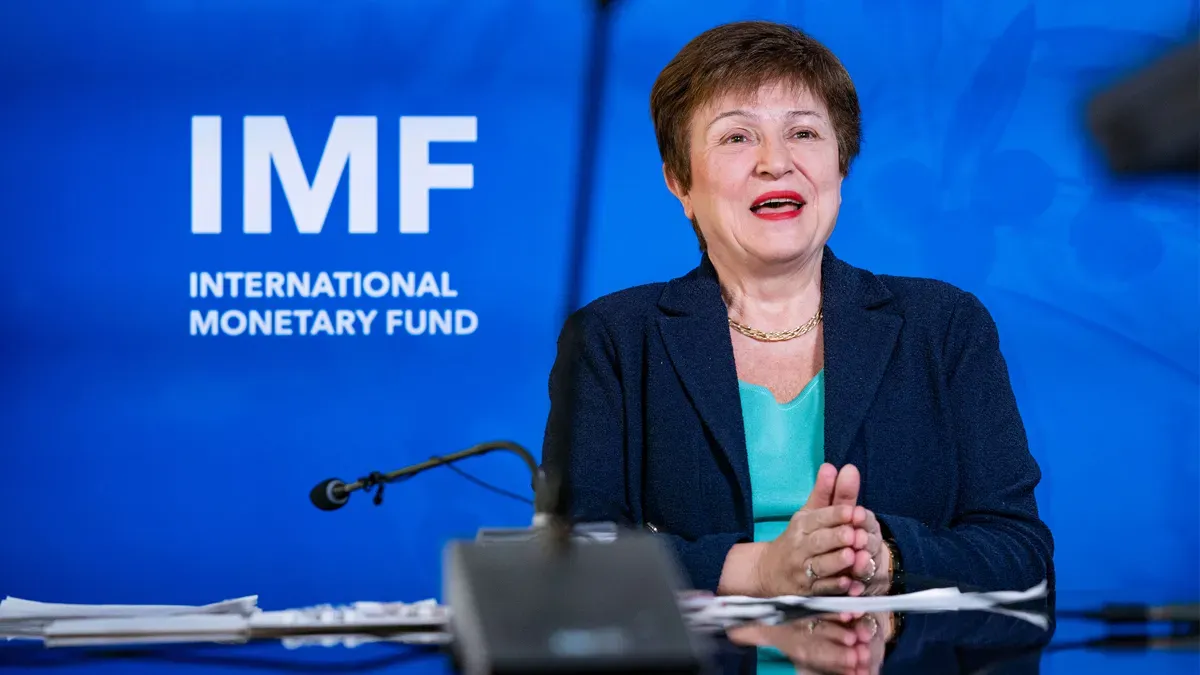
He said, “It was with great satisfaction and sincere hope that I welcomed the announcement made last Tuesday by the Managing Director of the IMF, Kristalina Georgieva, that an IMF Executive Board meeting will be held on March 20, 2023, to consider and hopefully approve the Extended Fund Facility (EFF) arrangement we requested as part of our efforts to restore macroeconomic stability and debt sustainability.
I would like to praise your diligence and express my gratitude to the Paris Club creditors and Japan in particular, and to India and China for enabling the cooperation required to arrive at this point and explicitly delivering IMF-compatible financing assurances, as well as the other creditor countries that answered the Paris Club creditors’ call to join them. I would also like to thank the Paris Club Secretariat for supporting these efforts.
In an earlier meeting, Minister Ali Sabry during the visit of Indian External Affairs Minister S Jaishankar praised India for its generosity as the first responder to Sri Lanka?s distress call when in trouble, unlike any other country in the region.
President Wickremesinghe?s predecessor, Gotabaya Rajapaksa, while holding the reins as Sri Lanka?s president in January 2022, asked China to help restructure debt repayments. The request was made as part of efforts to help resuscitate the worsening financial crisis, President Gotabaya Rajapaksa?s office said in a statement.
It was during the visit of Chinese Foreign Minister Wang Yi to Colombo on Sunday, January 9, 2022, that Rajapaksa made the request.
Sri Lanka has obtained billions of dollars in soft loans from China, but by January 2022, it was without a doubt wading through troubled and murky waters associated with one of the worst economic downturns since independence and seeking assistance from its creditors.
China?s help was not forthcoming. Instead of a debt moratorium to restructure the outstanding loans, China offered another loan to repay the debts and wanted to expedite the Free Trade Agreement with China.
China, which had expressed its displeasure to Sri Lanka for reaching out to the IMF bailout before consulting them, warned Sri Lanka but gradually softened its stand after Beijing realized that it could no longer maintain its earlier stand and turn a blind eye to Sri Lanka if they were to achieve good results from the one belt, one road initiative. (OBOR)
In the end, China decided to pull Sri Lanka out of a possible economic abyss by joining the rest of the world.
The Chinese Ambassador to Sri Lanka, Qi Zhenhong, during the early phase of the economic crisis and when Gotabaya Rajapaksa was still the president, told the finance minister at that stage, Ali Sabry, that China would fully support Sri Lanka in securing assistance from the International Monetary Fund (IMF).
China, as a major shareholder in the IMF, was willing to play an active role in encouraging the IMF to positively consider Sri Lanka?s difficulties. This was reportedly what Ambassador Qi told Minister Sabry.
China’s earlier position would have alienated them from the majority of Sri Lankans, who look to the world for help during this unprecedented economic crisis. China is seen as a major player in the world economy and has provided financial assistance to many countries in need. Therefore, Sri Lankans were worried that any deal with China would come with too many strings attached. This meant that they would not be able to find the economic relief they needed.
It is generally acknowledged that while India rushed to Sri Lanka’s aid with funds and material aid, China was indolent in its approach. China had cold-shouldered Sri Lanka?s appeal for a debt moratorium. The Chinese appeared to be making use of the crisis to get some of their long-standing demands met. They probably thought that Indian help would run out in a few months, the IMF?s conditions would be too painful, and the Sri Lankans would have to come back to China for funds in the not-too-distant future on China?s terms. For example, the Chinese have pushed for access to the strategic Hambantota port and encouraged Sri Lanka to enter into a ‘debt for equity’ swap program.
Rather than restructuring its debt, China offered a loan of US$ 1 billion to repay loans that Sri Lanka had already taken from China. In addition, China offered another $1.5 billion credit line to buy Chinese products. When President Gotabaya Rajapaksa told the visiting Chinese Foreign Minister, Wang Yi, in January 2022, it would be a “tremendous relief” if China restructured the repayment schedule, Wang did not commit himself. He suggested Sri Lanka provide the necessary conditions for Chinese investments, make Colombo Port City and Hambantota Port “engines of Sri Lanka?s industrial growth,” and resume talks for an early conclusion of a free trade agreement.
Besides, the Chinese ambassador to Sri Lanka said China would wait for the outcome of Sri Lanka’s negotiations with the IMF. He warned that bilateral relations between the two countries would be shaped by this outcome. His comments may have been in reference to the IMF’s potential disapproval of Chinese loans, which, according to the West, would place developing countries in a debt trap. In the same vein, the Ambassador reiterated Wang’s call for early action on the Sino-Lankan Free Trade Agreement as a possible solution.
Sri Lanka was virtually saddled with another issue as to how the West would react to any deal with China.
While Sri Lanka looked to get the IMF, it also couldn’t sideline China, since that country is one of Sri Lanka’s largest bilateral lenders.
After Wang?s visit in January, the Chinese Communist Party-run Global Times quoted Song Wei of the Chinese Academy of International Trade and Economic Cooperation as saying that only “interest-free loans” are eligible for debt relief and that loans raised on the market are not.
However, Song added that China may “negotiate equity cooperation and rescheduling,” thus indicating the existence of a window of opportunity for debt rescheduling.
Meanwhile, US Under Secretary for Political Affairs Victoria Nuland, while on a visit to Sri Lanka, was critical of the stand taken by the Chinese government.
“That credible standard of debt relief did not seem to be forthcoming from the Chinese. A two-year moratorium on debt repayment was finally offered by the Chinese after months of being scarce in the process of debt renegotiation. A ten-year moratorium on debt repayment, including some debt writedowns, was discussed by Western aid donors in the Paris Club. In the words of Ms. Nuland, this commitment was very clear. “We, the United States, are prepared to do our part. Our Paris Club partners are prepared to do their part. India has made strong commitments that it will provide the credible assurances the IMF is looking for,” she said.
A “GROUNDVIEWS” article written by Haim Peiris stated:
The Chinese showed at the very least a reckless disregard for the economic vulnerabilities of their borrowers, especially Rajapaksa-led Sri Lanka. This is, or is not, as their detractors claim, a cynical method of creating pliant client states.
In order for China to achieve the status of a global power, it must deal with international issues, especially international financial issues. China, like other world powers, does not want to end up being isolated in its foreign affairs. Mostly due to some adroit work by some of Sri Lanka?s other friends, namely India and the Paris Club of creditor nations, the Chinese find themselves in the unenviable position where all others are ready for a pragmatic and generous approach to debt restructuring, while for them the very mention of it is unthinkable, making their long-term position likely unviable.
It is nevertheless notable that China has agreed to a debt moratorium compatible with the IMF requirements after an inordinate delay.
The President told Parliament the other day that the government of Sri Lanka had received financial assurances from China to go ahead with the much-wanted IMF bailout package.
Recommended For You


