Opinion
Aragalaya by another name, but…
12 Mar, 2023
By N Sathiya Moorthy
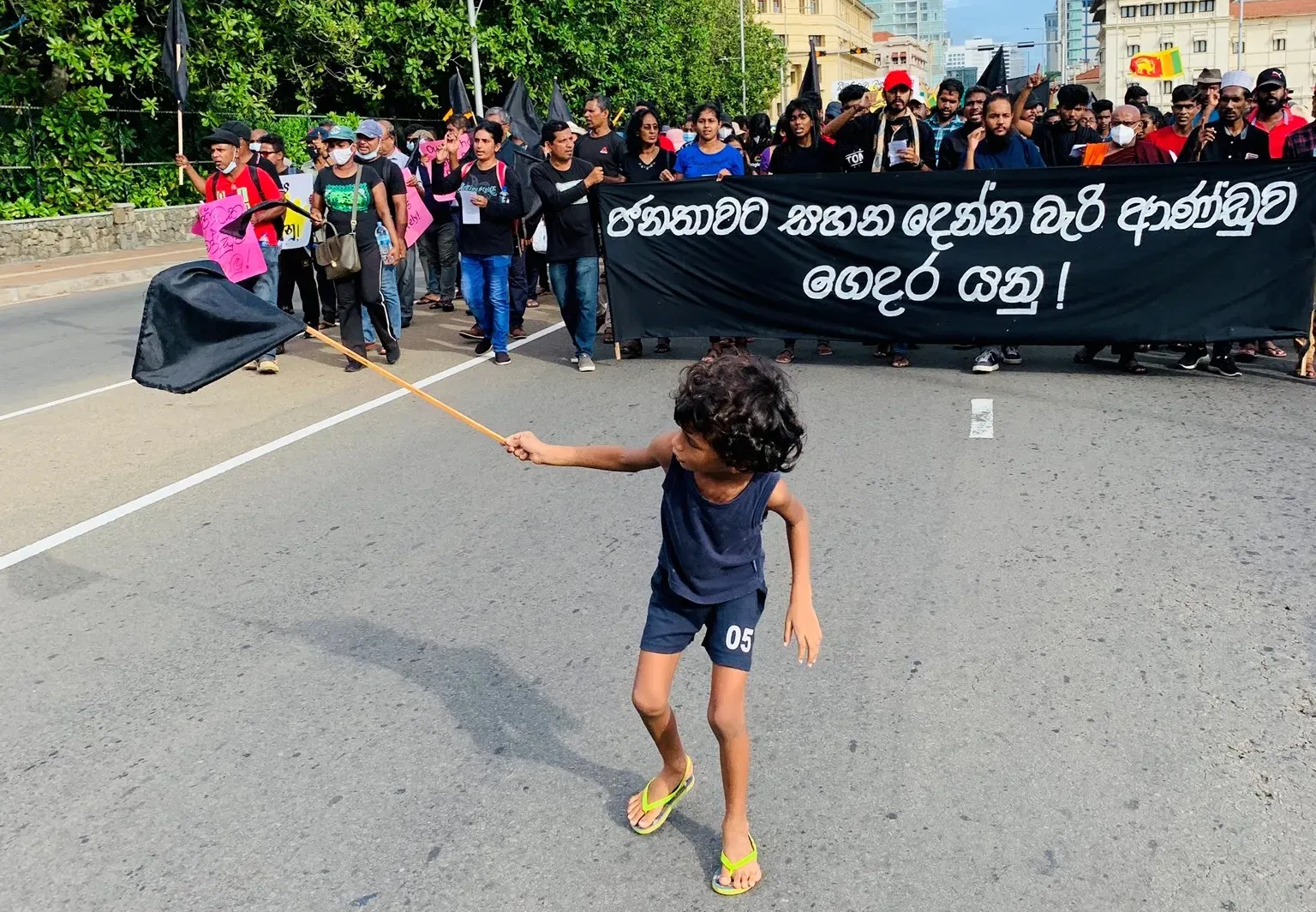
By all available accounts, the continual strike by various sections of government and other public sector employees, represented by and in 47 trade unions, to press their various demands, mainly focussed on the steep hike in income-tax for the salaried class, and their threat for a week-long combined protest, to begin with, is only another Aragalaya by another name.
Combine this with the multi-party Opposition demands and protests for nation-wide local government polls instantaneously as they complete their term on 19 March, the cocktail of mass-protest, or a picture thereof, is complete. Or, so would it seem.
But the reality is otherwise. It is very true that different sections of the nation?s population have different grouses against the incumbent government of President Ranil Wickremesinghe. It is another matter that many in the Opposition have begun referring to it as ?Ranil-Rajapaksa government?, hoping that the negative public support for the latter, as reportedly brought out by successive opinion polls through the past year, would rub off on the former.
If so, it only implies that they are afraid that Ranil may have already gained a certain amount of popularity in the few months that he is in office, and is expected to do better in the coming weeks and months, if allowed to settle down. Who knows, in the Opposition?s calculations, Ranil?s future-cum-futuristic public image may even lift the Rajapaksa popularity out of the deep morass into which it has sunk in the past year.
Anti-Rajapaksa, all
For all this, the current one cannot be called Aragalaya in the same way the original one was described last year. There were claims first and confirmation later that much of the crowds in the previous one were organised by centre-left political parties like the JVP or the FSP ? and they are still fighting (though silently) over authorship and ownership. That was only a part of the story.
There definitely was at the time a self-fulfilling mission, beginning with the urban middle class, especially in capital Colombo, which is still in the nation?s only city or town, where class, caste, religion and ethnicities are near-evenly distributed and in substantial numbers. True, Colombo was never ever a Rajapaksa citadel. It was anything but that, though they too did vote massively for Mahinda in the post-war 2010 presidential polls and for younger brother Gotabaya in the post-Easter blasts election in 2019.
Colombo?s middle class used to be traditionally pro-UNP and the outlying rural areas were pro-JVP, where the residents are Sinhalas. The other three ethnicities, namely, the Sri Lankan Tamils (SLT), Muslims and Upcountry Tamils took instructions from their political masters on votes and protests.
But they were all out in the middle against President Gota, his maladministration and misadventures of the ?organic farming? kind that all rocked their dining-table spreads in the end and in ways they were not prepared for. That segment may after all be absent this time round even though their sympathies may still be with the agitators, for different reasons.
At least, their involvement, now or later, would not be as spontaneous as last year. It could still be there, if the threatened agitations prolong and lead to shortages and supply-chain problems, for their own reasons.
More vulnerable…
It is not just about the IMF bail-out package. When it comes, it would be less appreciated than if it had arrived months earlier. Well, it could also expose President Ranil?s claim that the IMF funds would undo all the past damage, all at once. Or, that is the kind of impression that he and his minions have spread across the country through the past months.
An early IMF package would have made the nation look up to more wonders of the kind from Wickremesinghe?s hat. Today, that urgency and novelty having been lost, no one is expecting any wonders to happen to their lives in the foreseeable future. This has made the government leadership more vulnerable than already ? and from all sides.
All of it does not cover the multiple allegations against this government, as against any other. The list includes corruption, lawlessness, rather, police high-handedness, but does not end there. There are even charges that the police used expired teargas shells on protestors (motivated social media activists made unsubstantiated charges about the use of ?chemical weapons?), but the authorities have promptly denied.
Or, is it that the protestors are feeling the usual heat that was missing during the Aragalaya protests last year? At the time, the explanation was that the policemen and armed forces personnel too were human-beings first, and that their families too suffered the consequences of the economic crisis, including the forex crisis, like any other.
If that were the case then, does it mean that they all have now been exempt from those taxes and tariffs, particularly the power-tariff? Or, was it that the top brass of the uniformed services did not do what they should have done, and did not obey orders, coming directly from then President Gotabaya or Defence Secretary, Gen Kamal Gunaratne, who continues to hold the post?
The question is if Gen Gunaratne would want to write a book on what he thought really happened during the Aragalaya protests as he had done in the case of the conclusive Eelam War IV. After all, he was the General-Officer-Commanding (GoC) of the 53rd Division of the Sri Lanka Army (SLA), which liquidated the LTTE fighters, including the most-dreaded Velupillai Prabhakaran, at Nandikadal.
Sweet revenge
Independent of their demands and attendant justifications, there clearly is a one-point agenda for the political parties protesting against this government, and demanding national-level local government elections (LGE) as the first step towards ensuring the exit of this leadership. Just now, they are seemingly looking only at the parliamentary polls as the next big step, which they hope to win (whichever party or the alliance be the victor).
The idea then seems to be to force President Ranil to quit as the Aragalaya protestors made predecessor Gota to take refuge elsewhere before exiting dishonourably. It was something close to the way he had got the war-time army commander, Field Marshal Sarath Fonseka, cashiered after being imprisoned on what looked like trumped up charges before a kangaroo court in uniform.
Towards a first step to their goal, the otherwise divided Opposition is demanding LGE as if the future of individual Sri Lankan lives is dependent as much on each vote as each dollar that the nation could have had towards this time last year. Their idea is to then pressure President Wickremesinghe to dissolve Parliament, as already empowered under President Gota?s 21st amendment to the Constitution, which remained unaltered under incumbent Ranil?s 22nd amendment. Then they hope to pressure the President, from both within and outside Parliament, even more.
They however seemed to have missed out on an outside possibility, as Ranil as a wily politician, is not expected to play along, unlike the all-knowing Gota, who had reportedly ignored his own brother and political mentor, Mahinda Rajapaksa, then his prime minister. Yet, what any Opposition strategist should consider at the moment is the outside possibility of Ranil throwing in the towel, and quitting, if it became too hot on the surface ? but equally sweet revenge, below the radar.
Mahinda returns?
Theoretically, should Ranil quit, then Prime Minister Dinesh Gunawardena becomes President ? and there is no constitutional limitation on the number of times the game could be played out during the lifetime of a particular Parliament (until fresh elections become due). In such a scenario, nothing can stop Mahinda from returning as Prime Minister. Already, the PM?s office has quelled social media rumours about his making way for Mahinda. Here the question is if Dinesh Gunawardena did so with Mahinda?s blessings, or was it on his own volition, with blessings instead from his old schoolmate and incumbent President.
Either way, if Ranil himself makes the way, and the Gunawardena-Mahinda team took over (even if in the wildest of someone?s dream), it would not be the same as Gota?s term with his unscientific approach to political administration, starting with the overnight switch to ?organic farming?, only because China had enough to dispose of (or, that was the plausible reason). A past master with a finger to the pulse of the people, Mahinda could be expected to swear by the IMF conditionalities.
But unlike Ranil, a ?reformed? Mahinda could be expected to pull out one IMF brick after another from inside with greater sophistication and punctuated periodicity, as he and his parent SLFP had done earlier, too, whenever in power….That may be a wild guess, yes, but the divided Opposition strategising in vacuum for their early return to power, should think aloud, think many times over (which habit they still need to learn from the men that they are really targeting ? be it Ranil, or Mahinda, or both).
(The writer is a policy analyst and political commentator, based in Chennai, India. Email: sathiyam54@nsathiyamoorthy.com)
Recommended For You