Opinion
The faulty Chinese giant Norochcholai causes enormous financial losses to cash-strapped Sri Lanka.
07 Mar, 2023
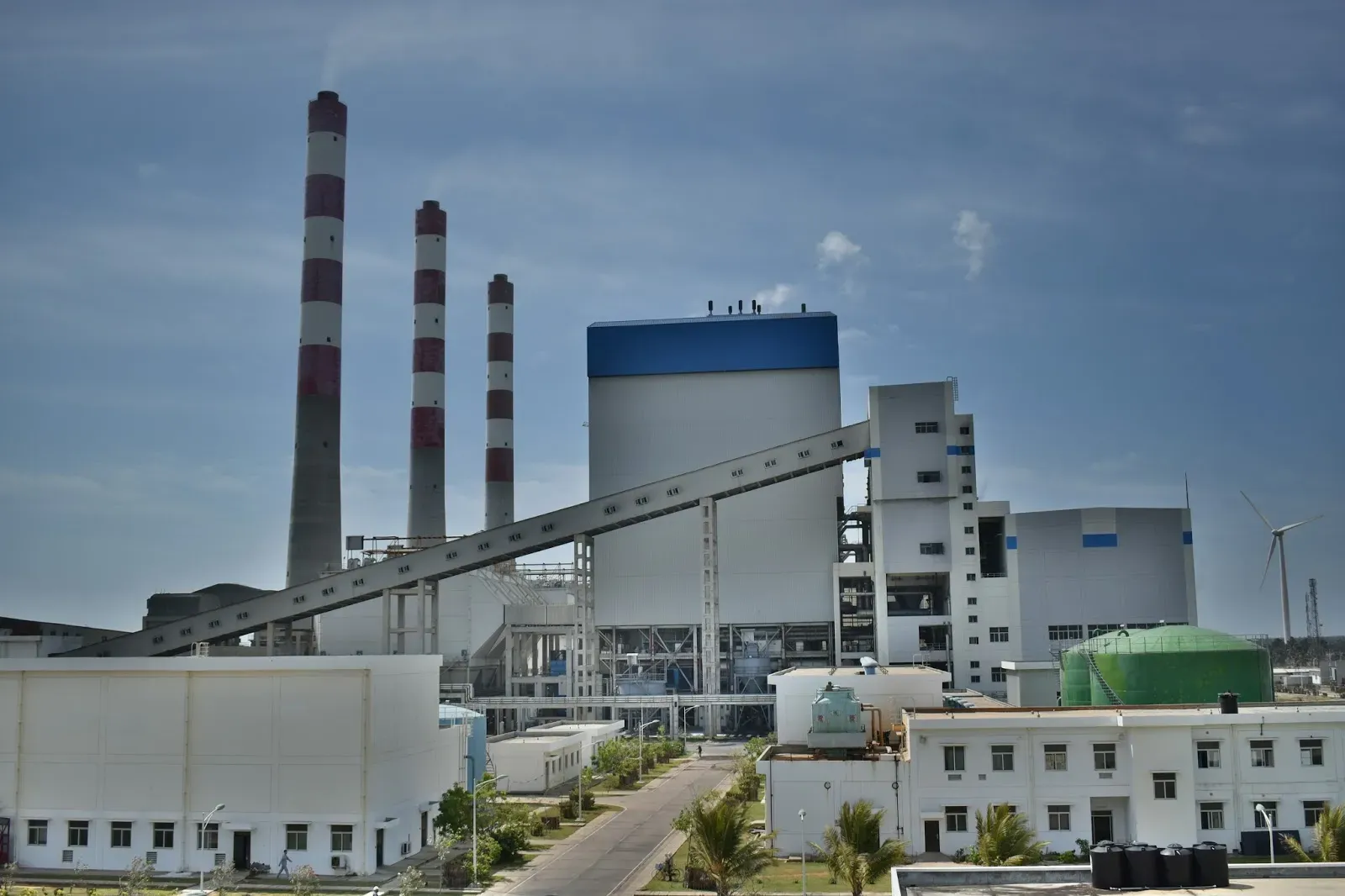
The Norochcholai Lakvijaya coal power plant has become an eyesore to the people in the vicinity and all alike.
People in the vicinity find it difficult to cope with the gas emissions, especially “fly ash” emissions that cause respiratory ailments and skin diseases.
Villages in the area are saddled with many issues owing to the emissions of the coal power plant. An article in the Sunday Observer written by Dimuth Attananyake carried a detailed account from the villagers? perspective in Norochcholai.
The Sunday Observer of June 17th,?2018 said
Residents living around the Norochcholai power plant are convinced that their ailments are somehow linked to the coal power plant, especially since coal and ash particles are constantly floating around the villages. Villagers tell frightening stories of how an expectant mother in the area has been admitted to the hospital three times due to different complications so far, and how even this could be linked to the pollution in the area. Concerned residents have also resorted to drinking only bottled water to avoid drinking ground water that they suspect might be contaminated by coal dust.
Unlike in the past, residents make it clear that they have no other issues with the Lakvijaya plant. “If we don?t have to deal with ash or coal dust, we don?t have any other issues with the power plant,” they told reporters on a visit to the area. But this is a big enough problem.
One of the main grievances related to the power plant has been the large amount of ash and coal particles that blew in with the high winds.
Villagers had to protect their eyes and faces from the particles that rode in with the wind.
Executive Director of the Centre for Environmental Justice, Hemantha Withanage, said the main issues with the plant are related to the fly ash and bottom ash produced during the power generation process. Fly ash and bottom ash are byproducts of the coal combustion process, where fly ash is made up of fine particles that escape combustion chambers with exhaust gases, while bottom ash is a non-combustible residue that collects at the bottom of the boiler.
“On average, the plant produces 2.5 million metric tons of bottom ash per year and 1000 metric tons of fly ash per day. When the electrostatic precipitator (ESP), which filters the fly ash, breaks down, fly ash is released to the atmosphere through the chimneys,” he said.
Withanage explains that bottom ash contains heavy metals, such as arsenic, nickel, copper, and mercury, which are harmful to human health. “To prevent the seeping of these metals into the soil, they should be deposited on a layer of sodium bentonite and covered by a trampoline from the top,” he said. According to him, if mercury mixes with the area?s water table, the water is no longer safe for drinking. Mercury can also be fatal to humans if it accumulates in the digestive tract.
“Therefore, the hair and nails of the people in the area should be tested for the presence of mercury. We are hoping to carry out a study on this. This is actually the duty of the Ceylon Electricity Board (CEB) and the Ministry of Health,” Withanage said.
Others living elsewhere had experienced frequent power outages due to the problems at the Norochcholai Lakvijaya power plant.
The regular breakdowns have incurred substantial financial losses for the Ceylon Electricity Board. The then Deputy Minister of Power and Renewable Energy, Ajith Perera, was on record saying that the power plant was built with substandard and outdated materials and is well below international standards.
In 2005, the ministry of finance signed a $300 million preferential buyer?s credit (PBC) with the Exim Bank of China for Phase I of the Puttalam/Norochcholai Coal Power Project.
Then, again on September 8, 2006, China Exim Bank signed yet another $155 million buyer?s credit loan (BCL) with Sri Lanka.
The PBC carries a 20-year maturity, a 5-year grace period, and an interest rate of 2%. The BCL carries a 15-year maturity, a 5-year grace period, and a 6% interest rate.
This project involved the installation of a 300 MW coal power plant, a jetty for coal handling, transmission lines from Norochcholai to Veyangoda, and a substation at Veyangoda. China Machinery Engineering Corporation (CMEC) was the contractor responsible for project implementation. The first stage of this coal power station, inaugurated by the president, cost $450 million, while the second stage is estimated to cost $891 million.
A project inauguration ceremony took place on May 11, 2006. Phase I construction began on July 23, 2007. The first 300-megawatt phase was completed and ceremonially commissioned by President Mahinda Rajapaksa on March 22, 2011.
Meanwhile, a fire broke out at the initial stages of the construction of the power plant due to a clogged chimney. The government subsequently asked the construction company to bear the cost of the damages caused.
There had been a series of breakdowns, causing immense hardship to the construction company and the host country, Sri Lanka.
On July 22, 2012, the power station ceased operations due to a leak in one of the thousands of tubes carrying water between the boilers. The country was put into controlled regional power outages to cope with the missing generation.
On August 8, 2012, a tripping of the power line from Lakvijaya caused the power station to cease operations.
On January 29, 2013, the power station exceeded its design levels of 300 MW, causing a complete shutdown. The plant was reactivated a day later.
On December 13, 2013, a steam leak was detected.
On January 12, 2014, a local newspaper reported the power plant was shut down due to a leak from the repaired condenser that had been detected, and the plant shut down for the 26th time. It also reported that in the previous 24 days, it had been shut down on four occasions.
In December 2015, it was reported that all three coal plants in the facility were offline due to multiple plant failures.
In March 2016, the country was without electricity for more than eight hours following a massive system breakdown stemming from a power plant.
In August 2020, a ?technical fault? at the plant caused a nationwide blackout and power rationing. Despite a previous expert committee having recommended it as far back as February 2017, the plant still didn’t have an auxiliary (external) power supply mechanism to keep the units alive in the event of a grid failure.
In December 2021, some engineers claimed power shedding and random power cuts were expected as coal was in short supply. In addition, two generators may have developed faults.
On June 17, 2022, a generator at the Norochcholai Coal Power Plant was shut down for essential maintenance.
On December 23, 2022, one of the three coal power plants was shut down in order to manage the existing coal stocks and for routine maintenance.
It has come to light that no proper investigation has been conducted by CEB or Lakvijaya to understand why these units are failing continuously and to decide on suitable interventions.
Several failures of this power plant have caused thousands of hours of generation loss while incurring a nearly 6.5 billion rupee reduction in income to the national economy due to the unavailability of the plant, as per the Ceylon Electricity Board (CEB) Annual Report 2015.
Moreover, it has been reported that the maintenance work at the plant is done by Chinese engineers only, and the manuals available for any repair work are written in the Chinese language. This means that the local engineers are unable to rehabilitate the plant without any Chinese expertise. The CEB has to pay more than $70 million by 2022 towards maintaining the 35 Chinese engineers at Norochcholai.
According to a CEB official, “We are keeping the liaison with China for two reasons. Firstly, our [CEB] skill retention is weak. Once specialized, few remain at the post for long; many retire, and some seek transfers. Another factor is that the government’s pay scales don?t reflect their specialization. In the case of some of the key components, the manufacturer does not provide details about them as they have their own technology or design secrets. Also, there are ?black box? parts that are not indicated in the technical drawing; no details are given, and they only come with instructions to be replaced if they malfunction. We find such design secrets in European, Japanese, and Chinese designs too. Therefore, if we sever our ties with the Chinese OEM, there is no way to source these specialized parts. A power plant is an intricate set of machines, so we need to keep a close link to the sources of its parts.”
Last year, the government cancelled plans to build a fourth coal power generation unit at the Norochcholai facility, which was estimated to add another 300 MW of generation capacity to the national grid upon completion. The project was to be funded through a Chinese loan and built by a Chinese manufacturer. The addition to the Lakvijaya plant at Norochcholai was scrapped in line with the government?s policy of meeting 70% of power needs through renewable sources.
It is a prudent decision in the face of the numerous problems Sri Lanka has been encountering with Norochchlai.
Recommended For You


