News
Natural gas: The bridge on India?s path to energy atmanirbharta
09 Oct, 2022
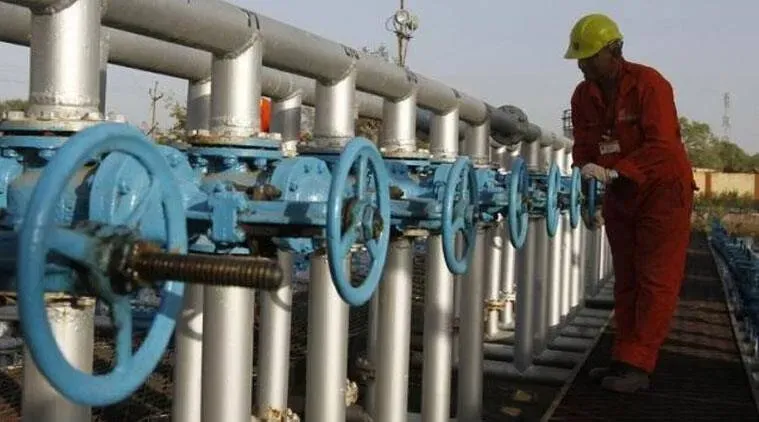
My final column set out a 10-point highway map for vitality atmanirbharta (Constructing the long run, IE September 5). On this article, I?ll elaborate on considered one of them: The significance of pure fuel because the bridge gasoline in direction of that aim. The set off for this elaboration is the announcement on the finish of August by the ministry of petroleum that that they had constituted a committee, headed by vitality professional Kirit Parikh, to overview the home pure fuel pricing regime.
My consideration (moderately concern) was triggered by three components.
One, the committee?s phrases of reference instructed it was tasked to sq. the circle between ?market-oriented pricing? and ?administered? pricing. The committee was directed to develop ?market-oriented, clear and dependable pricing regimes? to facilitate ?India?s long-term imaginative and prescient for guaranteeing a gas-based financial system?. And, study the problems associated to making sure ?a good value to the tip shopper?. I used to be not clear how the committee would reconcile the 2.
Second, there have been a number of committees previously. Their mixed impression has been to create a panorama dotted with a potpourri of fuel pricing regimes. It?s because the suggestions made by one committee haven?t changed these made earlier.? I?m involved this newest initiative would possibly add an additional layer to this already ?notoriously complicated? stack.
Third, the composition of the committee suggests the federal government has plans to additional tighten controls over pure fuel pricing. 4 of the six members are from the general public sector.? I?ve excessive regard for public sector experience however I don?t anticipate them to suggest steps that can diminish their function. I puzzled, subsequently, in regards to the destructive impression of the transfer on the federal government?s goal to maneuver ahead ?in direction of a gas-based financial system?.
The committee was required to report again in 30 days, and it?s potential their suggestions have already established that my line of considering is exaggerated and unwarranted. Nonetheless, given its wider relevance, I elaborate under the explanations for my thought course of.
India has pure fuel reserves. Of that, there isn?t a doubt. IHS CERA has estimated India has undiscovered fuel sources of roughly 64 TCF.? The majority of that is, nevertheless, in harsh topography and complicated geology. These reserves are tough to find. Moreover, even when positioned, they?re tough to carry to market on economically viable phrases. It?s because the price of creating the event and manufacturing infrastructure is very large.? BP and its coventurers have, as an illustration, spent about 5 billion {dollars} over the interval 2011d and 2019 to supply three TCF of fuel. They anticipate to spend an additional 6 billion {dollars} to supply an extra three TCF.
The truth is India is a high-risk exploration play. There are inherent geologic, technical, and financial obstacles to attaining business success. If on prime of such obstacles there?s a additional constraint of administered pricing, it might most positively kill incremental investor curiosity. The federal government should recognise and adapt to this difficult reality. It must also be aware that petroleum firms have lowered their exploration budgets beneath stress to shift away from fossil fuels.
As regards fuel pricing, the panorama is presently dotted by a mixture of value plus, substitute worth and formulaic pricing rules. It?s because, as indicated earlier, the suggestions of assorted committees have been additive. Initially, when licences had been issued to PSUs on a nomination foundation, the worth of fuel produced by them was set by the Ministry of Petroleum on a cost-plus foundation. There was no controversy as exploration was the unique protect of presidency firms. In later years, following the involvement of the personal sector, costs had been linked to substitute substitute fuels. Then, in 2014, a committee really useful that home costs be tied to the weighted common value of fuel within the UK, US, Canada and Russia ? a curious choice because the latter had been exporters of fuel whereas India was fuel deficit and an importer. In 2016, one other committee instructed that the fuel produced from deep waters beneath situations of excessive temperature and excessive temperature be capped to the minimal of the weighted common import value of gasoline oil, naphtha and coal (as a collective) and the six-month lagged, landed value of LNG. This too was curious because it didn?t take note of the seasonality of LNG demand /provide and LNG costs. There have been a number of tweaks thereafter however none have allowed for the complete mirroring of market dynamics. Thus, there may be right now a disparity between the home value of $ 12.47 /mmbtu (for fuel from deep waters) and the worth prevailing within the Asia Pacific area of $ 36/mmbtu.? This low cost is a disincentive to potential worldwide traders.
Within the wake of the?Ukraine?disaster, the worldwide vitality market has undergone a profound transformation. It has fragmented and governments are responding to the rise in fuel costs by strolling again available on the market. They?re intervening by way of value controls, subsidies and the allocation of public funds for the creation of fuel infrastructure.
India ought to undertake the other course. It ought to clear up the present complexity and, apart from for producers of fuel from nomination blocks, allow all producers of fuel to find out costs by way of arms-length, direct and clear negotiations with totally different shopper segments. The priority that this can result in value gouging or unaffordable costs is exaggerated as producers can solely promote within the Indian market. There are not any liquefaction services for the export of LNG in India. Subsidies could need to be offered but when so, they need to be given instantly by the federal government, by way of the exchequer. The fuel producers should not be requested to bear that brunt.
India has made spectacular progress in direction of clear vitality. It has, nevertheless, a protracted solution to go earlier than it may absolutely wean itself off fossil fuels. Throughout this transitional section, fuel producers needs to be granted unfettered advertising and marketing and pricing freedom. Solely then would possibly fuel present a stable bridge. (Courtesy Indian Express)
Recommended For You